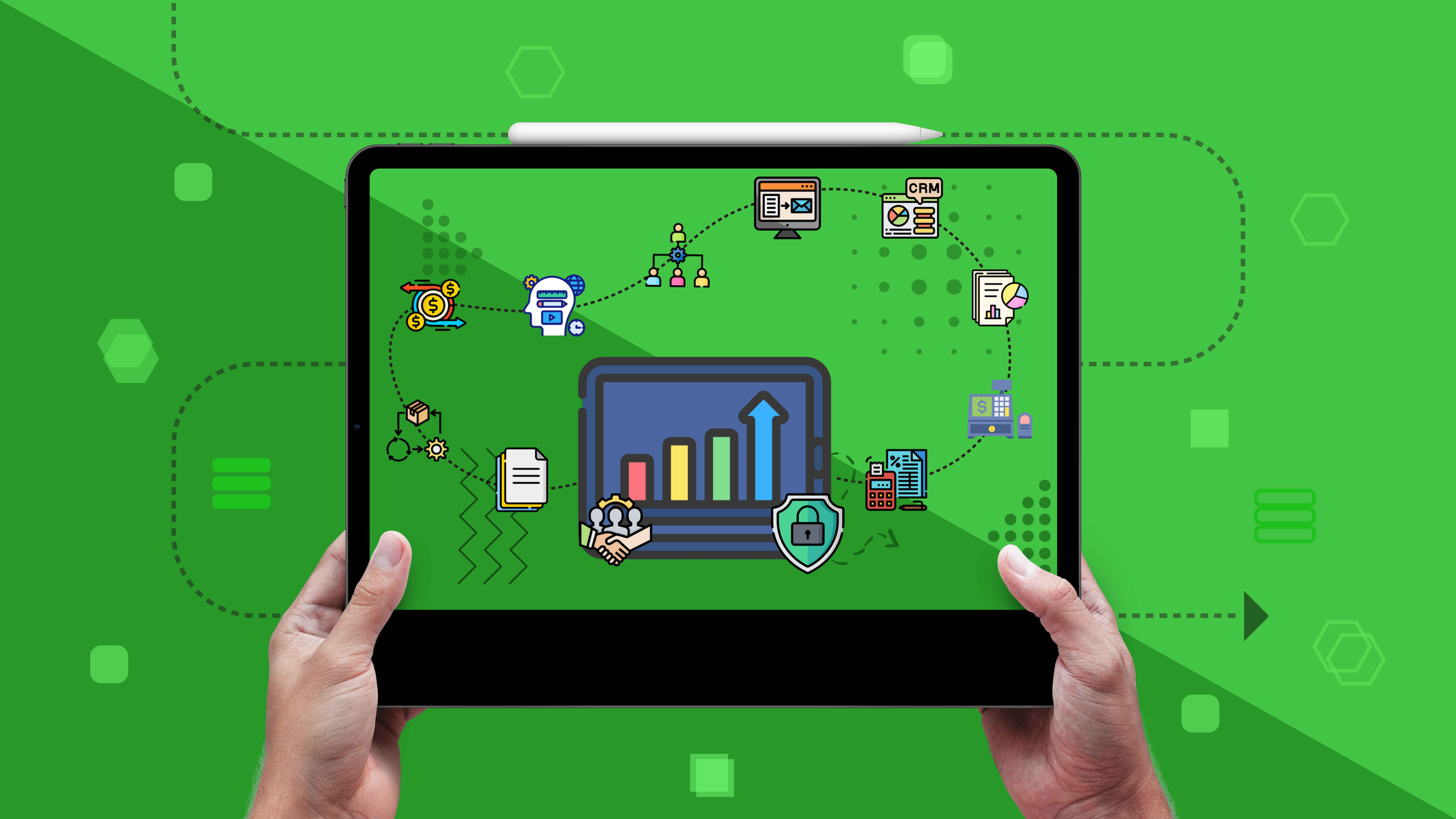
Our Services
Design: creating a custom solution that meets the business's specific needs and goals. This may include identifying needed modules and features, and designing the user interface and experience.
Development: involves building the software system, including coding the modules and features, integrating with third-party systems, and testing the system's functionality.
Implementation: Involves installing the software system and setting up necessary infrastructure and integrations.
Maintenance and support: Ensures the system is running smoothly and efficiently, and includes fixing issues, adding new features, and providing technical support.
Consulting: Offers advice and guidance on how to use the system effectively and optimize processes for efficiency.
Customization: Involves adapting the software system to meet the business's specific needs and requirements (user interface, features and functionality…)
Data migration: Transferring all data from existing systems into the new software.
Integration: Involves connecting the software system with other systems and platforms used by the business, such as e-commerce platforms and CRM systems.
Security: Ensuring the safety of the software system and it’s compliant with regulations and standards. This may also include security measures such as two-factor authentication, regular security audits…
Upgrade and upgrade support: Providing support and help when upgrading to a new version of the software system. This may involve helping with the planning and execution of the upgrade, but also providing technical support throughout upgrade process.
Retail: The inventory management systems is used by many retailers in order to track their inventory, but also optimize their stock levels to ensure they have products at the right moment. They may also use POS systems to process transactions and track sales data.
Manufacturing: ERP systems are often used by companies allowing them to manage different processes and also track materials, inventory, and other resources.
Healthcare: Many facilities use IMS for tracking supplies and equipment, as well as ERP systems for managing different records and other tasks.
Hospitality: Many businesses use POS systems to process transactions and track customer data. They may also use inventory management systems to track food and beverage supplies and manage their budgets.
Construction: Companies put to use IMS in order track materials and equipments, as well as ERP systems allowing them to manage project schedules, budgets, and many operational tasks.
Wholesale and distribution: Inventory management systems is used by many businesses allowing them a track of their stock levels and also optimize supply chain operations. IMS may also be used to manage sales, financials…
E-commerce: IMS may be used allowing e-retailers to track different stock levels and ensure the availablity of products customers want. POS systems may allow e-retailers to process online transactions and track customer data.
Agriculture: Tracking livestock, feed, or even managing financials and other operational tasks. Farms and ranches may use IMS for differents goals.
Transportation: Companies like shipping companies use IMS to follow up with their vehicles and equipment, as well as ERP systems to manage their finances and logistics.
Government: Agencies may use IMS to track their supplies and equipment, as well as ERP systems to manage their finances and different administrative tasks.
Nonprofits: Organizations may use IMS to track their supplies and equipment, as well as ERP systems to manage their finances and different operational tasks.
Chemical: Companies may use IMS to track their raw materials and finished products, as well as ERP systems to manage their finances and different operational tasks.
Aerospace: Companies may use IMS to track their supplies and equipment, as well as ERP systems to manage their finances and different operational tasks.
Mining: Companies may use IMS to track their supplies and equipment, as well as ERP systems to manage their finances and different operational tasks.
Automotive: Automotive companies may use IMS to track their parts and supplies, as well as ERP systems to manage their finances and different operational tasks.
Biotechnology: Companies may use IMS to track their raw materials and finished products, as well as ERP systems to manage their finances and different operational tasks.
Electronics: Electronics companies may use IMS to track their parts and supplies, as well as ERP systems to manage their finances and different operational tasks.
Fashion: Fashion companies may use IMS to track their products and supplies, as well as ERP systems to manage their finances and different operational tasks.
Our Inventory Management Software (IMS) helps businesses track, manage, and optimize inventory in real time, reducing waste and improving efficiency. Whether you're in retail, manufacturing, healthcare, or logistics, our software adapts to your unique needs.

✦ Real-Time Inventory Tracking – Monitor stock levels, locations, and movement effortlessly.
✦ Automated Stock Alerts – Get low-stock and out-of-stock notifications.
✦ Multi-Store & Warehouse Management – Seamless transfer of inventory between locations.
✦ Forecasting & Demand Planning – AI-powered analytics to predict stock needs.
✦ Barcode & RFID Integration – Improve accuracy with automated scanning.
✦ Point of Sale (POS) Integration – Connect sales and inventory in one platform.
✦ User-Friendly Dashboard – Easy navigation with interactive reports and insights.
✦ Regulatory Compliance – Follows industry-specific rules and government regulations.
Our Inventory Management Software is designed for businesses across multiple industries
✧ Retail & E-Commerce – Manage stock levels, optimize supply chains, and automate reordering.
✧ Manufacturing – Track raw materials, production stages, and finished goods.
✧ Healthcare – Monitor medical supplies, equipment, and pharmaceutical stock.
✧ Hospitality & Restaurants – Manage food and beverage inventory efficiently.
✧ Wholesale & Distribution – Optimize supply chain operations with real-time tracking.
✧ Construction – Track materials, tools, and equipment for better project management.
✧ Agriculture – Monitor livestock, feed, and farm supplies.
✧ Automotive & Electronics – Track spare parts, supplies, and production materials.
✧ Aerospace, Mining & Biotechnology – Manage raw materials and regulatory compliance.
Custom Solutions – Tailored inventory software to meet your business needs.
Cloud-Based & Scalable – Access anywhere, anytime with a secure infrastructure.
Seamless Integrations – Connect with ERP, CRM, and e-commerce platforms.
Comprehensive Support – Implementation, training, and ongoing maintenance.







 par Eurosiamart